What are Bonsai ?
Bonsai is a traditional Japanese art form that involves cultivating miniature trees in containers, shaping them to mimic the appearance of full-sized trees in nature. The word "bonsai" itself is a Japanese term that translates to "planted in a container" or "tray planting." The goal of bonsai is to create a realistic representation of nature in a small, confined space.
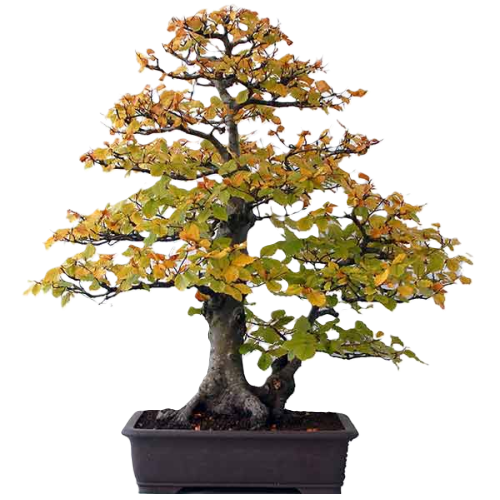
Key features of Bonsai include:
Size: Bonsai trees are intentionally small, often ranging from a few inches to a couple of feet in height. The size is crucial for creating the illusion of a mature, full-sized tree in nature.
Container: Bonsai are grown in shallow containers or pots, emphasizing the need for careful control over the tree's size and development. The choice of container is an essential aspect of the overall design.
Proportions: Bonsai artists pay careful attention to the proportions of the tree, ensuring that it looks balanced and natural despite its reduced size.
Pruning and Training: Bonsai trees undergo meticulous pruning and training to shape them. This includes trimming the branches and roots, wiring to guide the branches' growth, and other techniques to achieve the desired aesthetic.
Aesthetic Principles: Bonsai design follows certain aesthetic principles, such as asymmetry, balance, and harmony. The goal is to create a visually pleasing and natural-looking composition.
Species Diversity: While many people associate bonsai with Japanese maple or pine trees, virtually any tree or shrub species can be used for bonsai. The choice of species depends on the artist's preferences, the climate, and the desired style.